I want healthy hair


Collagen is the most abundant protein in the body; it helps form tendons, ligaments, and skin.
The body produces collagen, but you can also get it from food and dietary supplements.
It offers a range of health benefits, such as promoting healthy, strong hair.
Here are 5 proven ways collagen can improve your hair.

Hair is composed primarily of the protein keratin.
The body uses several amino acids to produce keratin—some of which are found in collagen.
When you consume collagen and other proteins, your body breaks them down into amino acids, which are then used to create new proteins and compounds.
There are eleven nonessential amino acids that the body can produce on its own, and nine essential amino acids that you must obtain from your diet. Collagen consists primarily of three nonessential amino acids: proline, glycine, and hydroxyproline.
Proline is also a major component of keratin. Therefore, consuming proline-rich collagen should provide the body with the building blocks it needs to produce hair.
Collagen can act as an antioxidant and help fight damage caused by free radicals.
Free radicals are compounds that form in the body as a result of stress, air pollutants, smoking, an unhealthy lifestyle, alcohol, and other environmental factors. Too many free radicals can damage cells, proteins, and DNA.
Research shows that free radicals can also damage hair follicles. Since the body’s defenses against free radicals decline with age, older people are particularly susceptible to hair damage.
The body needs antioxidants to fight free radicals and promote healthy hair.
Several studies have shown that collagen—particularly that derived from fish scales—may have strong antioxidant activity.
One study even found that marine collagen was able to combat four different types of free radicals, while another found that the protein may be a more effective antioxidant than a well-known compound found in tea.
Nevertheless, keep in mind that the studies were conducted only on isolated cells in laboratories. The antioxidant potential of collagen in the body is therefore unclear.
Collagen makes up 70% of the dermis, the middle layer of the skin that contains the root of each individual hair.
Collagen, in particular, contributes to the elasticity and strength of the dermis. As we age, the body becomes less efficient at producing collagen and regenerating cells in the dermis. This may be one of the reasons why hair begins to thin over time.
Supplying the body with collagen can therefore help maintain healthy hair and prevent hair thinning.
A study of 70 women aged 35–55 found that daily use of collagen supplements significantly improved skin elasticity compared to a placebo.
Another study involving more than 1,000 adults found that daily collagen supplementation increased the amount of this protein in the skin and reduced signs of skin aging.
Since hair grows from the skin, collagen's ability to counteract the effects of skin aging may contribute to improved hair growth and a reduction in hair thinning.

Thanks to its antioxidant properties, collagen may be able to combat cellular damage and slow the graying process.
Age-related graying of the hair is largely influenced by genetics, but damage to the cells that produce hair pigment caused by free radicals may also play a role.
As you age, the cells that produce melanin—the pigment that gives hair its color—begin to die off naturally. However, free radicals—which result from a poor diet, stress, and environmental pollutants—can also damage the cells that produce melanin.
Without enough antioxidants to combat damage from free radicals, hair may start to turn gray.
Since collagen has been shown in test-tube studies to combat free radicals, it may theoretically help prevent damage to the cells that produce hair pigment. As a result, it may prevent premature graying or slow down age-related graying.
Nevertheless, there is currently a lack of research on the antioxidant effects of collagen in humans.
You can incorporate collagen into your diet through food or dietary supplements.
Because it is a component of mammalian connective tissue, it is found in the skin, bones, and muscles of chicken, beef, pork, and fish.
Broth made from animal bones contains both collagen and gelatin, which is a cooked form of collagen. This bone broth can be sipped as a beverage or used as a base for soup.
In addition, eating foods high in vitamin C can boost the body's natural production of collagen. Oranges, bell peppers, Brussels sprouts, and strawberries are excellent sources of this vitamin.
Finally, collagen can be taken in the form of supplements—pills or powder. Most collagen supplements are hydrolyzed, which means they have already been broken down and are more easily absorbed.
Collagen powder is tasteless and odorless and can be added to smoothies, coffee, and other hot or cold beverages. Flavored varieties are also available.
According to current research, collagen supplements appear to be safe for most people. However, some reports suggest that the supplements may cause a lingering aftertaste, stomach upset, or heartburn in some people.

Collagen can promote healthy hair growth in various ways.
The body may be able to use the amino acids in collagen to build hair proteins and strengthen the skin. It may also prevent damage to hair follicles and graying.
However, research on the effects of collagen on human hair is limited.
If you're interested in trying collagen to improve your hair, consider bone broth or dietary supplements that can be mixed into food or drinks.
This almost miraculous hair treatment promotes the body's own collagen production.

Summer and humid weather can cause some of us to struggle with problems like frizzy hair. Frizzy hair can be frustrating, especially when nothing seems to tame it. As annoying as frizzy hair can be, most of us aren’t exactly sure what causes it, which means we don’t know the best way to manage it. Don’t worry—we’re here to answer all your questions.
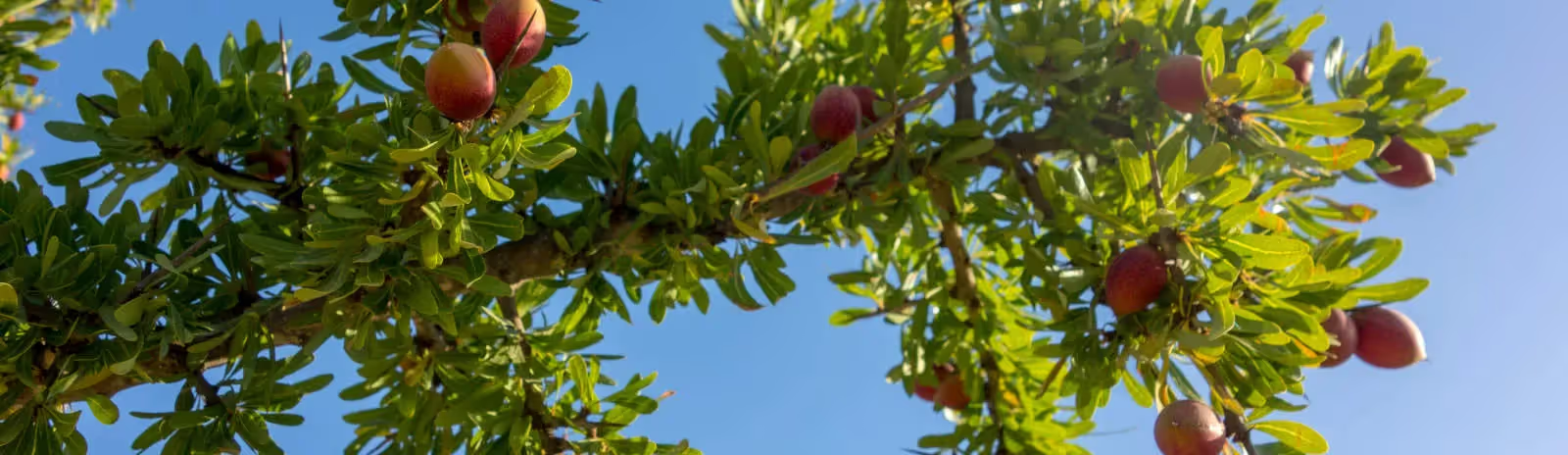
In the world of hair care and cosmetics, plant-based oils are becoming increasingly common ingredients. Hundreds of products claim to work wonders for your skin and hair. Are there real benefits, or is it just marketing? Read on to learn more about argan oil and why it’s beneficial for your skin and hair.
To offset our carbon footprint, we use advanced artificial intelligence technology through pachama.com. We support various projects for forest restoration and conservation around the world. You don’t even have to buy anything from us. We do this because it is one of our core business values: to give back what we have taken from nature.