I want healthy hair


You may have heard the term “hair porosity” and wondered what it means. Hair porosity is essentially the hair’s ability to absorb and retain moisture.
Hair porosity affects how well oils and moisture pass in and out of the outer layer of the hair, known as the cuticle.
Hair porosity is typically divided into three categories: Low porosity: Cuticles that are close together. Medium porosity: Cuticles that are less tightly bound. High porosity: Cuticles that are more widely spaced.
In this article, we'll take a closer look at what affects your hair's porosity, how you can determine your porosity type, and how to best care for your hair based on your hair's porosity.

To help you understand the concept of hair porosity, here are a few definitions regarding the structure of your hair, which consists of three layers. These layers include:
Cuticle: This is the hard, protective outer layer of the hair, which consists of smaller cuticles that overlap one another, much like shingles on a roof.
Cuticle: This is the thickest layer of the hair. It contains fibrous proteins and pigment, which gives the hair its color.
Medulla: This is the soft central part of the hair shaft.
To keep your hair healthy and hydrated, water, oils, and other moisturizing products must be able to pass through the cuticle to reach the cortex.
If the cuticles are too close together, it's difficult for water and oils to penetrate the hair. This can make it harder for your hair to get the moisture it needs.
If your cuticles are too far apart, your hair will have trouble retaining moisture and staying hydrated.
How your hair absorbs and retains moisture is largely determined by genetics. So if low-porosity hair runs in your family, there’s a good chance you’ll have low-porosity hair as well. Although genetics can influence porosity, it isn’t the only contributing factor.
Blow-drying, bleaching, straightening, over-washing, and using the wrong products—all of these can damage your hair over time. This can cause your hair cuticles to lift and open, making it harder for your hair to retain moisture.
In addition to hair treatments, excessive exposure to ultraviolet radiation can also increase your hair's porosity. To protect your hair from the sun, wear a hat or some other form of head covering when you're outdoors.
Is there an easy way to test hair porosity? One of the easiest ways to test hair porosity is to use a glass of water.
Procedure:

If a strand of hair floats on the surface before sinking, you probably have low-porosity hair.
If the strand floats somewhere in the middle of the glass, you probably have hair with medium or normal porosity.
If the hair sinks quickly to the bottom of the glass, you probably have highly porous hair.
You can also test the porosity level by running your finger along a strand of hair. Hair with low porosity will feel smooth, while hair with high porosity will feel rough and bumpy because the cuticles are open.
In hair with low porosity, the cuticles are tightly closed and very close together. This makes it difficult for moisture to penetrate the hair shaft.
You may have low-porosity hair if:
In hair with medium or normal porosity, the cuticles are not too close together, but they are not too open either. This allows moisture to penetrate easily and also makes it easier to retain moisture for a longer period of time.
You may have medium-porosity hair if:
Heat damage and other chemical processes can cause the hair's normal porosity to change over time.
Whether due to genetics or hair damage, highly porous hair absorbs moisture easily into the hair shaft but is unable to retain it for long. This is because the cuticles tend to have gaps between them.
You may have high-porosity hair if:

If you have genetically high or low hair porosity, you may not be able to change it. However, according to hair care experts, there are things you can do to make your hair healthier and easier to manage.
Use protein-free conditioners. These tend to be absorbed more easily by the hair and are less likely to cause product buildup.
Apply the conditioner to damp hair. Diluting the conditioner can help it absorb into your hair more easily.
Look for ingredients like glycerin and honey in shampoos and conditioners. Avoid products containing oils, as they tend to penetrate the cuticle less effectively.
Apply heat when styling your hair. Use a hair steamer, a heated cap, or a blow-dry cap. If you don't have any of these, put a shower cap on your hair as soon as you apply the conditioner.
Look for ingredients such as oils and butters in shampoos and conditioners. These ingredients will help moisturize your hair.
Use conditioner and a hair mask. These products help your hair retain moisture.
Use a heat-protectant on your hair. Apply this product before blow-drying or using other heat-based styling treatments. This will help protect your hair from heat damage.
Avoid using hot water when shampooing and conditioning. Use lukewarm water instead.
Hair porosity may not be a term you hear very often. But knowing your hair’s porosity can help you better understand how to treat and care for your hair. And that can lead to stronger, healthier hair.

Summer and humid weather can cause some of us to struggle with problems like frizzy hair. Frizzy hair can be frustrating, especially when nothing seems to tame it. As annoying as frizzy hair can be, most of us aren’t exactly sure what causes it, which means we don’t know the best way to manage it. Don’t worry—we’re here to answer all your questions.
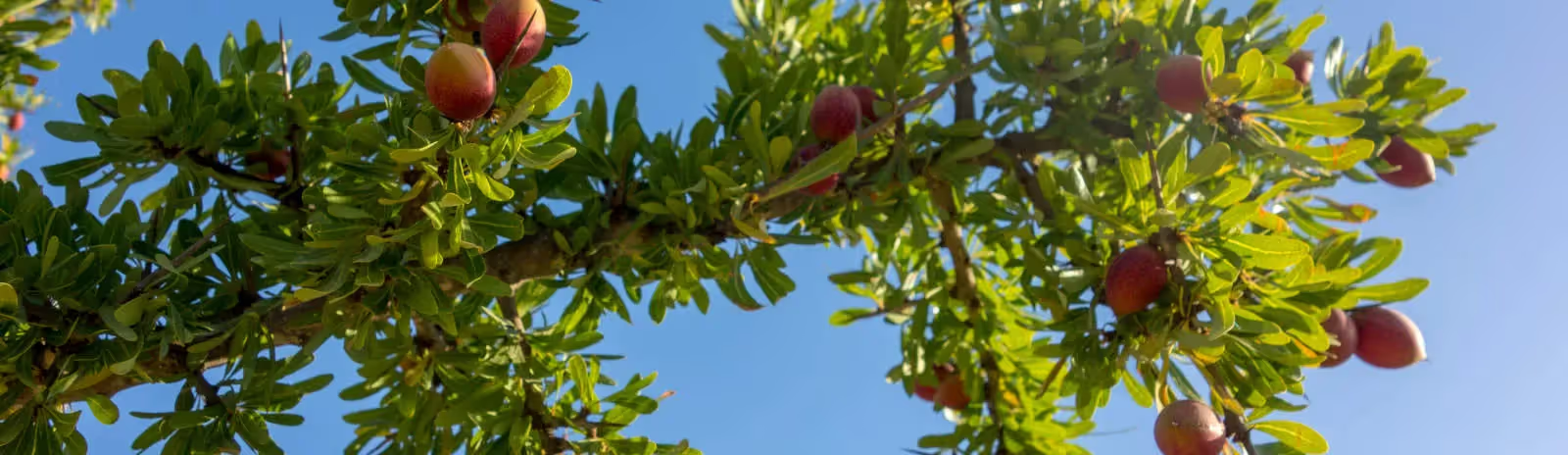
In the world of hair care and cosmetics, plant-based oils are becoming increasingly common ingredients. Hundreds of products claim to work wonders for your skin and hair. Are there real benefits, or is it just marketing? Read on to learn more about argan oil and why it’s beneficial for your skin and hair.
To offset our carbon footprint, we use advanced artificial intelligence technology through pachama.com. We support various projects for forest restoration and conservation around the world. You don’t even have to buy anything from us. We do this because it is one of our core business values: to give back what we have taken from nature.